this is a private blog for my design students and assorted other survivors. Tro blemakers all. this is a private blog for my design students and assorted other survivors. Tro blemakers all. this is a private blog for my design students and assorted other survivors. Tro blemakers all. this is a private blog for my design students and assorted other survivors. Tro blemakers all.
Monday, March 14, 2011
my friend Ani sent me a link today to a site of hauntingly beautiful - glass dry plate portraits of criminals from Australia during the 1920's and 30's.
Looking at them I am struck by their sad beauty, and remember reading a remarkable book by Robert Hughes - the notable art critic (the Shock of the New) and writer. The book is entitledThe Fatal Shore - it's an epic account of Australia's founding, and seeing these tragic portraits, I can't think of a more accurate title.
Australia is a typical modern paradise - alive with industry, people and all the crude trappings of success, but it was for a very long time, in fact for most of its history by far, a truly unknown land.
Australia, or New South Wales as it was known then, was all the way on the other side of the world - it was as far away from home as anywhere could possibly be. Imagine that.
To those thousands of luckless souls who found themselves cruelly "transported" away from home - chained aboardHer Majesty'sgrotesque prison ships - it was a truly terrible fate, the stuff of real nightmares, shackled - in a vast, poisonous continental prison.
Thursday, March 10, 2011
Class Cancelled Today - Thursday
March 10th. Sick, acke.. ack.. urp.. gorrrlp .. ewww
Hey, photo-contest !... of no known pedagogical value .. ..if you can
identify the chap in the boater, you'll win a prize, a brand new white
iPhone - shiny, expensive, cool ....
graciously donated by famed alumni Wesley Yendrys. Ok, you mumbly
hooligans ...Who is it ? and before you ask it's neither one of the
original Village People, nor is it my sister.
(I thought I was being real witty here, thinking there was no actual
white Iphone, hence, I was safe ... but today I was informed by my
students in that terrible tone that one reserves for complete idiots,
that there is in fact, much to my horror, a white Iphone .... You do realize you monkeys, there's no actual prize right ? and Wesley isn't going to actually donate one, you do get that right ? )
>Johnny - Christmas 1976, see ... nothing changes ... nothing.. he used to put cake mix in his hair, and yes, he then would put his head in the oven to harden it , a right nutter, our Johnny
1 und 2, please review this site - as it's full of fascinating
ideas during a time of stupefying mass/global similarity.
It's rather novel, which admittedly seems at least these
days to be, real adventure (no, it's not a novel, its novel)
from the department of wow ...." i never saw that coming " the Grammy's finally got something right, with Arcade Fire's, Album of the Year. A Fantastic album, with such a haunting, troubling perfect title video, directed by Spike Jonze ... which is very Terrance Malik btw
Friday, February 11, 2011
THE PAOMNNEHAL PWEOR OF THE HMUAN MNID
Aoccdrnig to a rscheearch at Cmabrigde Uinervtisy, it deosn't mttaer in waht oredr the ltteers in a wrod are, the olny iprmoatnt tihng is taht the frist and lsat ltteer be in the rghit pclae. The rset can be a taotl mses and you can sitll raed it wouthit porbelm.
Tihs is bcuseae the huamn mnid deos not raed ervey lteter by istlef, but the wrod as a wlohe. Amzanig huh?
Wednesday, February 02, 2011
digone here's the link for the photoshop tutorials
makes sure you review the sections on 1. making selections and 2. using layers, then repeat ! both are found in the Photoshop CS3, in the getting started section... so much snow aArrRgggGhhh .....
Sunday, January 30, 2011
Mark Weaver's make something everyday project, visit the site , his name is linked
Retrofuturs is the moniker of Stephane Massa-Bidal. Stephane is a French illustrator that aims to combine the past, present and future into each piece. This particular series uses Helvetica masked by objects that have been removed from photographs.
digital one, assignment one. introduce yourselves to each of these
graphic designers/typographers -look carefully at their work, learn
to recognize their styles, and read about their lives and influences.
One of the names is jumbled, mixed up on purpose. If you can deduce
who it is, extra marks ..... she's part of a famous design couple and
an influential company/magazine specializing one might say in
type. due second class. please, no showing off, digital one only !
Tuesday, January 11, 2011
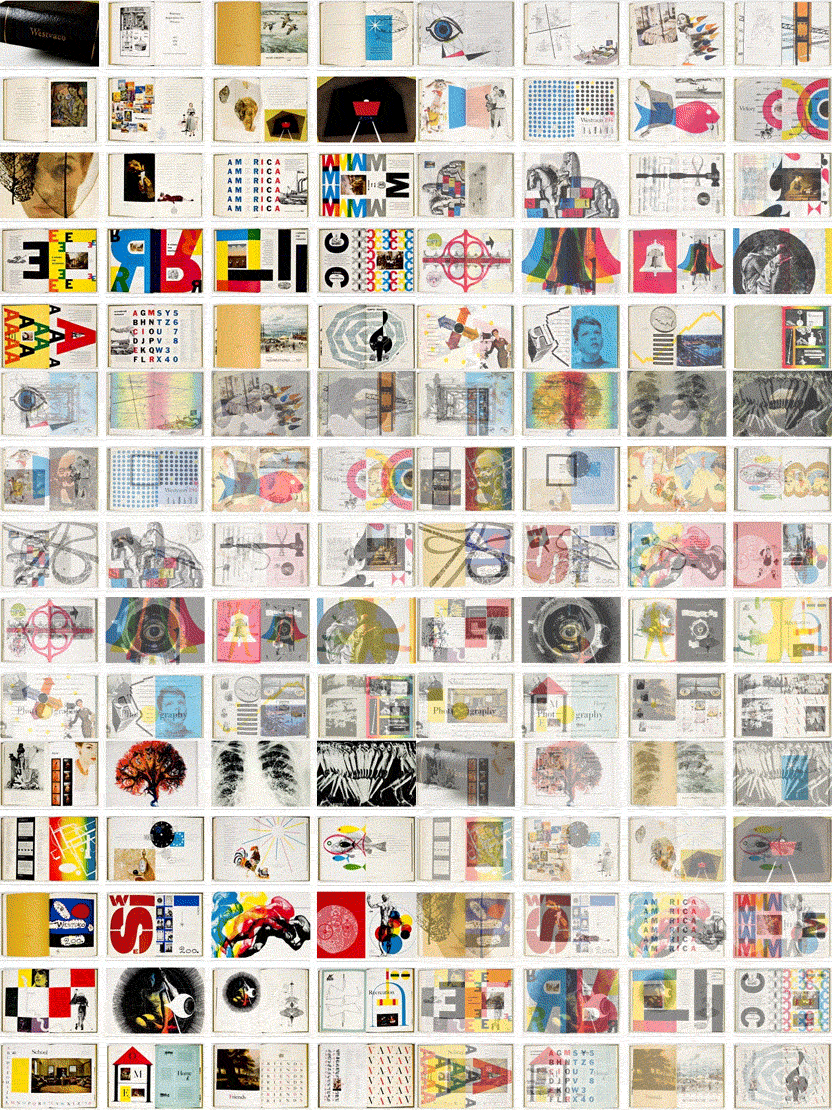
fyi, cleeek to enlarge
Wednesday, December 22, 2010
Westvaco, a printing concern, produced a collection of books/journals, meant as inspiration for designers, printers circa 1952. Largely designed by Bradbury Thompson, they're a riot of invention, visual wit, and sophisticated cultural and art historical references.
A wonderful summation of late cubism merging with the Swiss school , one which as well, predicted contemporary design 35 years early.
Sunday, December 12, 2010
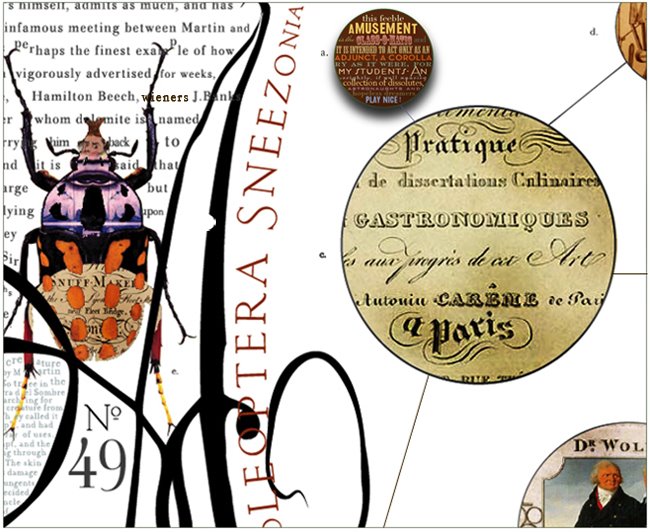
like totally my best ultra totally most favorite totally
fyi -you'll find, strangely enough, that should you
provoke the beast by clicking on him, he'll get larger
Friday, November 19, 2010
The Pleasure and Danger of Augmented Reality
Parag and Ayesha Khanna on November 19, 2010
Smart phones. One can’t imagine life without them. Ah, the endless convenience: looking up a restaurant on yelp, finding out a movie’s rating on rotten tomatoes, seeing that cute guy’s profile on Facebook. But to be honest, they’re not really that convenient. Every time you need information, you have to take out your phone, open the browser, type in a search, browse the results … after a while, even a smart phone can seem like a heavy dumb tool. Wouldn’t it be better to just look at a movie poster at the cinema and see its ratings appear next to it? When a beautiful woman talks to you at a party, wouldn’t it be great if her Facebook page with her interests and background pops up on the side too? You needn’t pine in despair: augmented reality will make these scenarios possible for you within a decade.
Augmented reality adds an information layer on top of everything in front of your eyes. How? By making you wear glasses that have tiny video cameras in them. These cameras “see” the world on your behalf and livestream it to the inside of your glasses. You feel like you’re watching the world through transparent glasses, but in fact you’re seeing a movie of the scene in front of your eyes. You could run around the whole day and never notice the difference between wearing these glasses and not wearing them: the glasses show you an exact replica of what your eyes would see. However, the advantage of having glasses is that now you can add software intelligence to them. These glasses can recognize an object in front of your eyes using image recognition software, search the Internet for information on that object and add it to the image display you see. The process of "recognize, search, add" is almost instantaneous.
One can immediately see the value of augmented content. Just imagine being a tourist in Paris and having a quick history of the Eiffel Tower displayed next to it. You’d never need holiday guidebooks like Lonely Planet again! The potential to transform the experience of education is full of promise. Instead of just reading about dinosaurs, your children could actually see small 3D dinosaurs walking on the table in front of them. But having augmented reality also has its cons. If a violent homophobe walks into a bar and his augmented reality glasses identify a person as being gay, it could become a potentially dangerous situation for that person. (To learn more about the latest augmented reality glasses priced at $2000 work, see this article and associated video on Singularity Hub)
Augmented reality adds content to a live streaming video, but it could just as easily remove content as well. This is known as diminished reality, and researchers at the Technical University of Ilmenau in Germany have developed software that can remove objects from live videos. So for example, say you had a massive fight with your ex-boyfriend and never want to see him again. You could program your glasses to remove him from your line of vision. If you walked into a restaurant where he was sitting with his new lover, the software in the glasses would remove him from the scene so that you would never know he was even there. (For technical details on how the software works, see a brief article here). Definitely watch this amazing video on how the software works.
Diminished reality can have many productive applications. Architects can imagine what a site will look like after a building has been demolished, for instance. At the same time, it can also become a destructive tool for spreading apathy in society. “I don’t want to see any homeless people on the street,” you may decide, and the software will keep deleting the poor lying on the sidewalks and you will never feel compelled to do anything about the stark income disparity in your city.
Augmented and diminished realities are going to become commonplace as image recognition becomes more sophisticated, and the circuitry and cameras become smaller and cheaper so that they can be embedded in the eye as contacts and become affordable for everyone. (See thisarticle by Babak A. Parviz whose lab at University of Washington is working on augmented reality contact lenses) These technologies can enrich our lives in a multitude of ways, but they can also forever lock each of us into an alternate reality of our own making.
Wednesday, November 17, 2010
sorry this is a few days late...
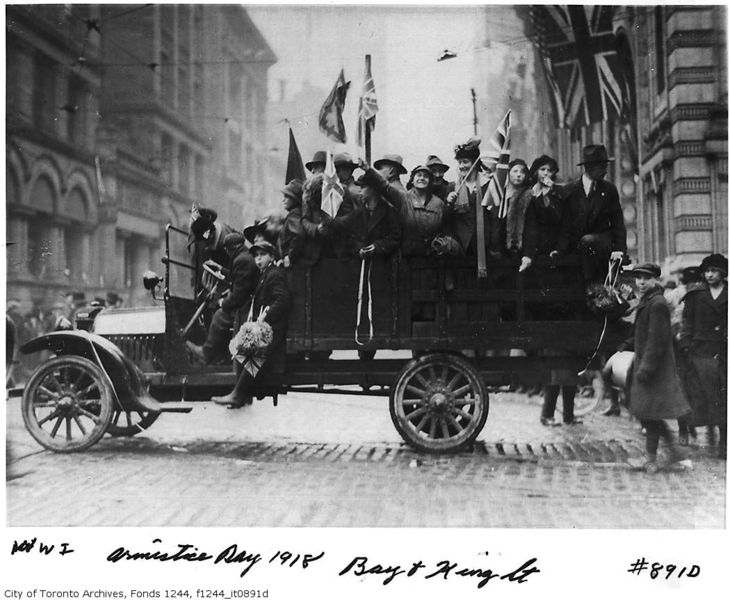
1918 Toronto, Bay and King streets Armistice Day
click for more clarity Armistice Day is the anniversary of the official end of World War I, November 11, 1918. It commemorates the armistice signed between the Allies and Germany at Compiègne, France, for the end of hostilities on the Western Front, which took effect at eleven o'clock in the morning — the "eleventh hour of the eleventh day of the eleventh month." While this official date to mark the end of the war reflects the ceasefire on the Western Front, hostilities continued in other regions, especially across the former Russian Empire and in parts of the old Ottoman Empire.
They had hoped, it was the war to end all wars ...
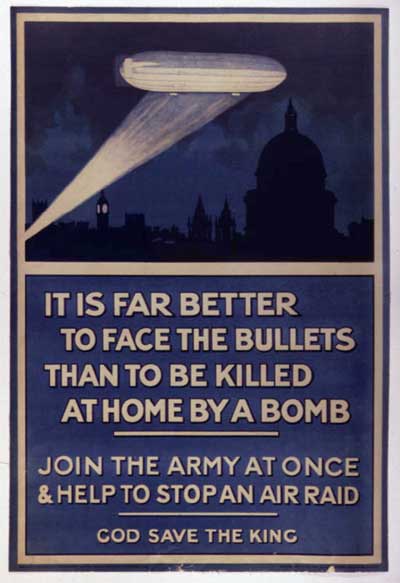
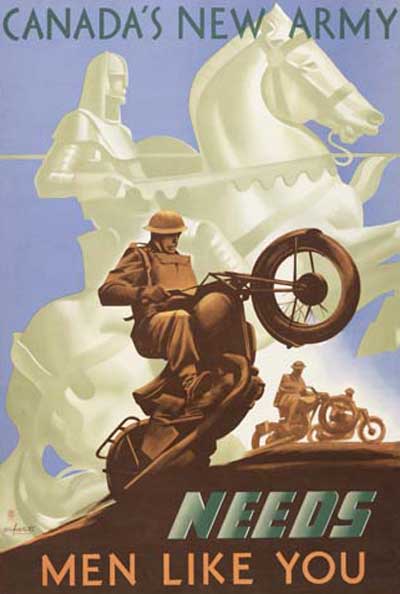
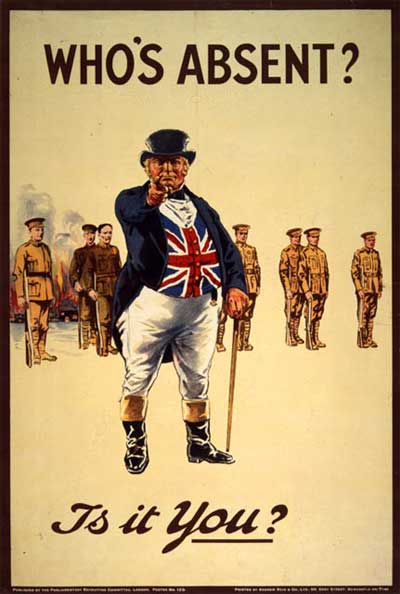
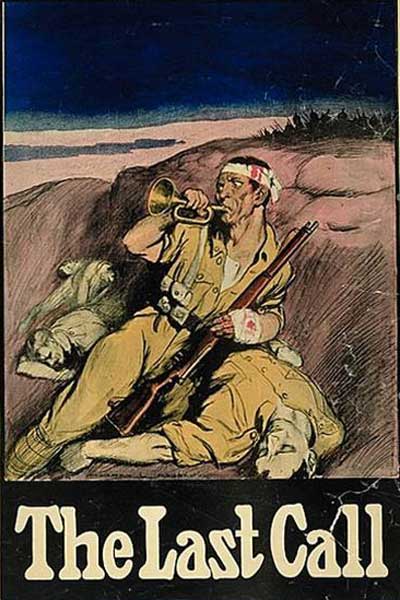
In some ways the visual Arts and in particular Graphic design, have long played a pivitol role in the mechanisms of War. Propaganda, has always been used - for good or for bad, to articulate a nation's motivations, to define or defile an enemy, or to incite a nation to Peace or to War. here are a few examples from the First World War.