this is a private blog for my design students and assorted other survivors. Tro blemakers all
this is a private blog for my design students and assorted other survivors. Tro blemakers all.

Thursday, January 13, 2011

digital one, assignment one. introduce yourselves to each of these
graphic designers/typographers -look carefully at their work, learn
to recognize their styles, and read about their lives and influences.
One of the names is jumbled, mixed up on purpose. If you can deduce
who it is, extra marks ..... she's part of a famous design couple and
an influential company/magazine specializing one might say in
type. due second class. please, no showing off, digital one only !

Tuesday, January 11, 2011

fyi, cleeek to enlarge

Wednesday, December 22, 2010

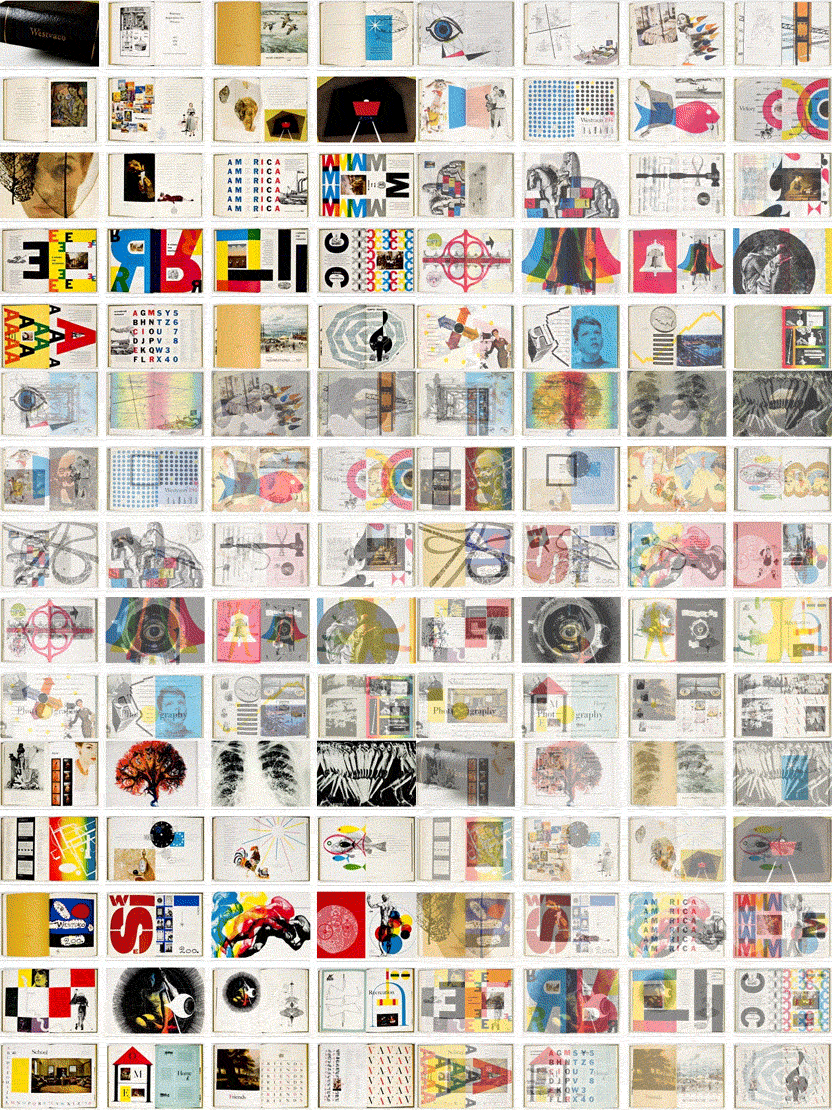
Westvaco, a printing concern, produced a collection of books/journals, meant as inspiration for designers, printers circa 1952. Largely designed by Bradbury Thompson, they're a riot of invention, visual wit, and sophisticated cultural and art historical references.

A wonderful summation of late cubism merging with the Swiss school , one which as well, predicted contemporary design 35 years early.


Sunday, December 12, 2010

like totally my best ultra totally most favorite totally
genius new bookcover design by, by David Gee.

the brilliant book covers of David Drummond


Saturday, December 11, 2010

Wednesday, December 01, 2010

I meant to post this for Remembrance/Armistice
day but forgot, it's quite remarkable isn't it?


fyi -you'll find, strangely enough, that should you
provoke the beast by clicking on him, he'll get larger

Friday, November 19, 2010

The Pleasure and Danger of Augmented Reality

Eye

Smart phones. One can’t imagine life without them. Ah, the endless convenience: looking up a restaurant on yelp, finding out a movie’s rating on rotten tomatoes, seeing that cute guy’s profile on Facebook. But to be honest, they’re not really that convenient. Every time you need information, you have to take out your phone, open the browser, type in a search, browse the results … after a while, even a smart phone can seem like a heavy dumb tool. Wouldn’t it be better to just look at a movie poster at the cinema and see its ratings appear next to it? When a beautiful woman talks to you at a party, wouldn’t it be great if her Facebook page with her interests and background pops up on the side too? You needn’t pine in despair: augmented reality will make these scenarios possible for you within a decade.

Augmented reality adds an information layer on top of everything in front of your eyes. How? By making you wear glasses that have tiny video cameras in them. These cameras “see” the world on your behalf and livestream it to the inside of your glasses. You feel like you’re watching the world through transparent glasses, but in fact you’re seeing a movie of the scene in front of your eyes. You could run around the whole day and never notice the difference between wearing these glasses and not wearing them: the glasses show you an exact replica of what your eyes would see. However, the advantage of having glasses is that now you can add software intelligence to them. These glasses can recognize an object in front of your eyes using image recognition software, search the Internet for information on that object and add it to the image display you see. The process of "recognize, search, add" is almost instantaneous.

One can immediately see the value of augmented content. Just imagine being a tourist in Paris and having a quick history of the Eiffel Tower displayed next to it. You’d never need holiday guidebooks like Lonely Planet again! The potential to transform the experience of education is full of promise. Instead of just reading about dinosaurs, your children could actually see small 3D dinosaurs walking on the table in front of them. But having augmented reality also has its cons. If a violent homophobe walks into a bar and his augmented reality glasses identify a person as being gay, it could become a potentially dangerous situation for that person. (To learn more about the latest augmented reality glasses priced at $2000 work, see this article and associated video on Singularity Hub)

Augmented reality adds content to a live streaming video, but it could just as easily remove content as well. This is known as diminished reality, and researchers at the Technical University of Ilmenau in Germany have developed software that can remove objects from live videos. So for example, say you had a massive fight with your ex-boyfriend and never want to see him again. You could program your glasses to remove him from your line of vision. If you walked into a restaurant where he was sitting with his new lover, the software in the glasses would remove him from the scene so that you would never know he was even there. (For technical details on how the software works, see a brief article here). Definitely watch this amazing video on how the software works.

Diminished reality can have many productive applications. Architects can imagine what a site will look like after a building has been demolished, for instance. At the same time, it can also become a destructive tool for spreading apathy in society. “I don’t want to see any homeless people on the street,” you may decide, and the software will keep deleting the poor lying on the sidewalks and you will never feel compelled to do anything about the stark income disparity in your city.

Augmented and diminished realities are going to become commonplace as image recognition becomes more sophisticated, and the circuitry and cameras become smaller and cheaper so that they can be embedded in the eye as contacts and become affordable for everyone. (See thisarticle by Babak A. Parviz whose lab at University of Washington is working on augmented reality contact lenses) These technologies can enrich our lives in a multitude of ways, but they can also forever lock each of us into an alternate reality of our own making.

Wednesday, November 17, 2010

sorry this is a few days late...
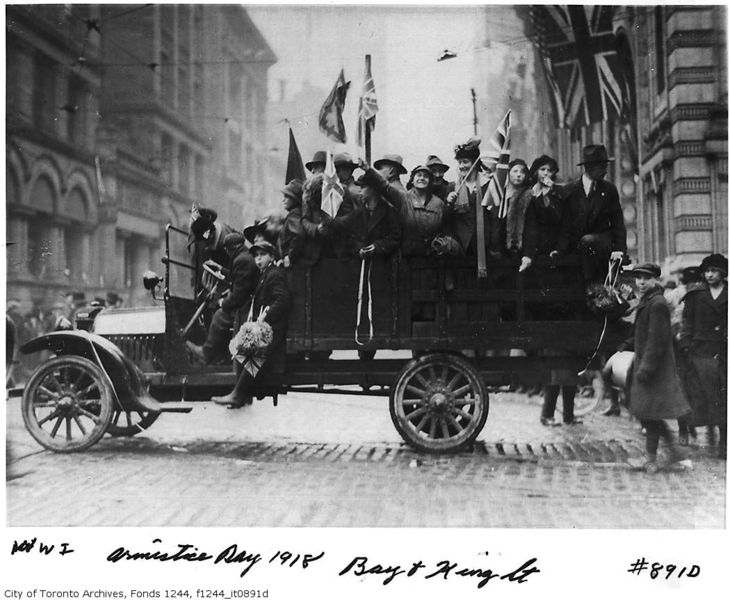
1918 Toronto, Bay and King streets Armistice Day


click for more clarity

Armistice Day
is the anniversary of the official end of World War I, November 11, 1918. It commemorates the armistice signed between the Allies and Germany at Compiègne, France, for the end of hostilities on the Western Front, which took effect at eleven o'clock in the morning — the "eleventh hour of the eleventh day of the eleventh month." While this official date to mark the end of the war reflects the ceasefire on the Western Front, hostilities continued in other regions, especially across the former Russian Empire and in parts of the old Ottoman Empire.

They had hoped, it was the war to end all wars ...

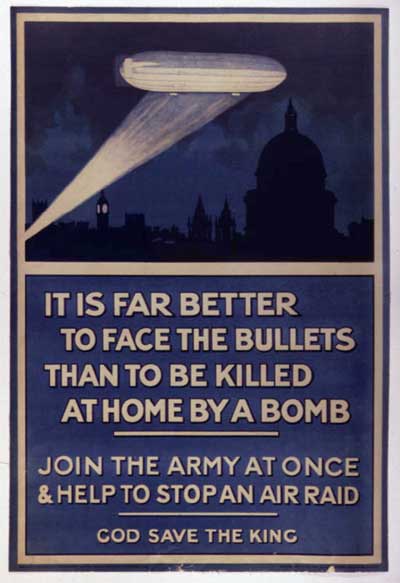
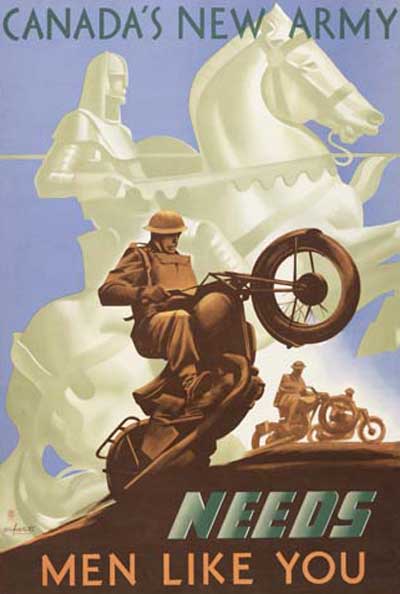
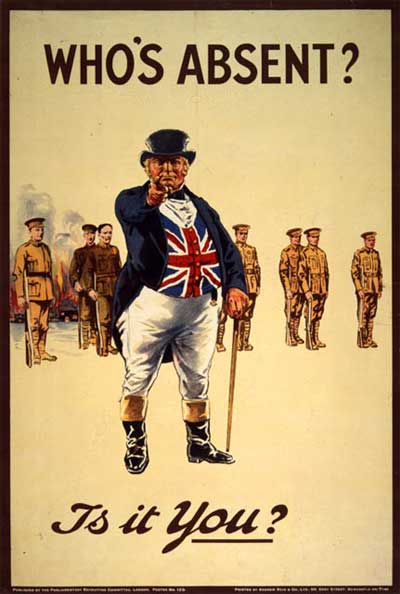
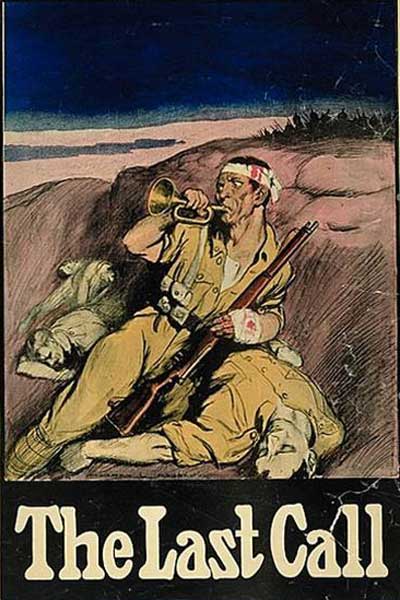
In some ways the visual Arts and in particular Graphic design, have long played a pivitol role in the mechanisms of War. Propaganda, has always been used - for good or for bad, to articulate a nation's motivations, to define or defile an enemy, or to incite a nation to Peace or to War. here are a few examples from the First World War.

click to enlarge


for more information about the First World War go to www.firstworldwar.com

Saturday, November 06, 2010


Monday, November 01, 2010

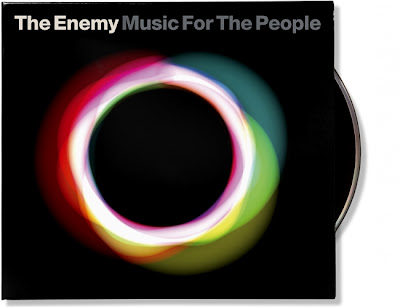
Music For The People’ art directed and designed byBig Active and featuring
light paintings by Berlin based artist AndreasNicholas Fischer. The eclipse
theme running throughout the imagery creates a grand and jarring visual
statement echoing the spirit of the album’s expansive direction.

Sunday, October 31, 2010

D2 please visit this Dutch Design Awards site. D1 you're
not allowed to see it .. maybe next year, if you work very hard ...
!

Saturday, October 30, 2010

those of you struggling with the magazine or
single page layout assignments - should have a
look at the wonderful work of


(his name is linked). Herb Lubalin's editorial
and page design was really innovative, so much so,
he influenced an entire generation of designers,
and to some degree, he continues inspire and
influence to this day.

Friday, October 29, 2010


Tuesday, October 26, 2010

" Nalden has been filtering 'lifestyle for digital natives' since 2002. This blog works like an online desktop and includes stories supported by audio, video, snapshots and photo galleries. Some people think this blog is about trends, but it is more about curated observations.

Sharing interests with a positive mindset, keeping it real like all good influential trend-setters. Discovering a wide spectrum of music, design, fashion & tech with a unique approach to distribution and content, resulting in a life-stream based upon the best ideas, energy & enthusiasm.

Today, the blog is a daily source of inspiration for thousands of people; artists, suits, beautiful women and many others from around the world who love to live in the present plus."

Nalden meets Niels 'Shoe' Meulman from Nalden on Vimeo.

Monday, October 25, 2010


The Industrial Revolution is often seen as a black hole in the history of typography. In that era the role of the punchcutter changed to that of a largely uncredited factory worker. Records of who worked on individual typefaces are sparse. Today it can seem as if there is practically no information left about the designers of the nineteenth century.american-type-detail

William E. Loy was a type vendor, printer, and writer. Loy was unhappy to see so little credit given to the designers of the types that he had spent decades using and selling. In 1896 he began work on a series of articles profiling type designers that appeared in The Inland Printer, the leading journal of the trade. Drawing on a lifetime of connections he obtained biographical information, photographs, and lists of designs to use in what he termed “sketches” about twenty-seven type designers. It was also his wish to include images of their work, but he was unable to do so for technical reasons.

Years in the business and use of firsthand sources make Loy a very credible source about the period, which spans the heyday of wood type and artistic printing. This credibility is so important because his articles identify the origins of important electrographic and pantographic techniques as well as the artistic printing movement (credited to use of John M. Wehrle’s Ornamented No. 1552, A.K.A. Ray Shaded). Loy’s biographies are brief but enlightening, examining the origins of nineteenth century American designers in England, Scotland and Germany and their subsequent immigration to the United States. The writing avoids speculation in favor of fact glazed with praise for the quality and importance of the type. Each sketch is brief, but packs a good deal of information by not dwelling on trivia.

Nineteenth Century Designers and Engravers of Type republishes Loy’s entire series of articles about America’s type designers. Editors Alastair M. Johnston and Stephen O. Saxe have furthered Loy’s work by using patent records to track down more typefaces not in Loy’s lists. Paired with the articles are images of over 800 typefaces by the designers reproduced from period specimen books. it's about 50$

click this type specimen to go to a way cool nerdish type site


Sunday, October 24, 2010

the one,& only, Jimmy Descant


Jimmy is a linked-o-

Wednesday, October 20, 2010


D1 & D2, please visit this linque

" This project stemmed from a discussion about designer’s inspirations, and how many creatives ( designer types ) found the V&A influential. We started planning an exhibition gathering pieces together, then realised that the logistics would be too daunting. Then we started to discuss other ways to show how the museum influenced people, and decided to create different maps of the museum, based on notable people’s favourite items."


Saturday, October 09, 2010

The inventive, remarkable world of graphic designer,
art director and illustrator Jean Paul Goude. Visit
his site and make sure you look at his work, in all it's
varied, controversial forms. his name is linked...
Notice, some of the work is Mature


Friday, October 08, 2010

David LaChapelle's return to fine art

The photographer known for his glossy, glamourised images reveals why he fell out of love with fashion and is now focusing on his art.

By William Oliver


Over a 20-year career, David LaChapelle has carved a name for himself as an enfant terrible of pop culture photography. The cutting, acerbic wit and layered symbolism in his celebrity portraiture, fashion and advertising images is seen as a bolt of honesty—albeit a glamourised and high-gloss one—in an industry known for its false vision of reality.

During the last few years, LaChapelle has moved away from commercial work to focus on fine art. While retaining his unique visual style, this new direction highlights his interest and understanding of both contemporary practice and art history.

While in London working on his current exhibition, “The Rape of Africa” at gallery Robilant + Voena (until 25 May), The Art Newspaper met up with the infamous photographer to discuss the show, falling out of love with fashion and the new path his work is taking.

The Art Newspaper: What is your interest in fine art photography?

David LaChapelle: The fact that so much contemporary work is conceptual. When you are looking at it you know that it can only be art because it couldn’t be anything else, but it can be difficult to unravel. That is something that activates me; I want to make work that that has a language people can read.

TAN: Although you have had a successful career shooting for advertising and magazines, you actually began in galleries. Why did you move into commercial work?

DLC: I started showing in galleries in the early 1980s in New York City. I felt successful because my friends liked the work, and some of my shows were well attended, but my last gallery show of that period, in 1991, really wasn’t. At that point, when you’re not reaching an audience, you have to look for other ways of getting your work seen.

TAN: Why do you think the show was not well received at that time?

DLC: To be honest I was naïve about the whole process back then, I didn’t even know that there was a hierarchy of galleries. I was showing in SoHo but the gallery itself was completely off the map. I became a little disillusioned, had met Warhol and was shooting for Interview. I began to treat the magazine as my gallery; if people ripped out the pictures to keep, that to me was like a collector or a museum taking the works.

TAN: After a long-standing career shooting celebrity portraits you have now moved back into fine art. Your latest exhibition centres on one image, The Rape of Africa. What was your idea behind that photograph?

DLC: I visited the National Gallery and began looking at Botticelli’s Venus and Mars. I wasn’t in love with Botticelli in the way I was in love with Michelangelo, but I saw this painting and was so excited by its personification of the gods in a figurative way. Having people represent war, greed, love and beauty, and the fact that they were post-coitus, seemed incredible. It occurred to me that the painting could be contemporary; the ideas in it still seemed so relevant today; as fast moving as our world is, we haven’t progressed with our morality or spirituality.

The use of Africa in my photograph is about it being the cradle of civilisation, the idea of Mother Earth and Mother Africa. The production of gold in Africa is destroying both the society and the country itself but continues because of our obsession in the West. The human suffering and the cost to the environment are incalculable. We are degrading our mother and we are raping Mother Earth in our quest for financial security, but while doing so we are ensuring our own insecurity.

TAN: Why did you choose Naomi Campbell as the model for Venus?

DLC: Botticelli used Simonetta Vespucci as his model for Venus. She was famous in Italy at that time for being a great beauty, and Naomi Campbell is a great beauty of our time. I wanted to twist the idea slightly and talk about greed and wealth etc. It was not just about Africa; Naomi in a way was the representation of Africa even though she is not actually from Africa. I looked at her and thought it didn’t matter, I didn’t need to have a woman from Africa to represent what I was trying to say.

TAN: Will The Rape of Africa form part of a series?

DLC: No, this picture is a stand-alone work. I am producing a lot of other pieces that are a series, but they are taking longer and longer to complete. Not because I am getting lazier with my production, but as I move forwards I am applying further layers to the narrative and symbolism in the imagery, and that process adds time.

TAN: Have you now fully made the move from fashion into fine art?

DLC: When I first left [fashion] there were a lot of reasons. I felt I had said all I could say within the format of the images I was making at that time and I had started to come up against a few problems from clients surrounding my ideas. I shot the series Jesus is my Homeboy for i-D, a hip contemporary style magazine, but they had issues with it because of the depiction of religion. I shot something for Italian Vogue that they had problems with because of the destruction in the pictures, and the fact that it was on newsstands around the time of hurricane Katrina. Also I wasn’t interested in the same things I was 25 years ago; I didn’t want to meet any new pop stars. It occurred to me I didn’t have the creative freedom I wanted. Fashion and magazines as a vehicle to reach a broader audience had reached an end for me, so I looked for other outlets.

When I first started the art pieces I said I would never go back to commercial but the studio became really quiet and I started to lose touch with my people. What I do is really collaborative, there is a huge amount of work that goes into the set building and designing. People think it is all done digitally but that is a fallacy. Really, because of this, I have done some commercial work recently but my real focus is now on my art.
Saturday, October 02, 2010

... Images - millions of images - That's what I eat
William S. Burroughs